



 June 22nd, 2026
 I haven’t done one of these in a while, but I think this is a controversial enough issue that it bears a little thought. It is also an issue that, as a musician and writer, it weighs on my life directly, and as a music lover, makes me a little bit sad. It is also something which I have strong opinions about. To start with, there is no such thing as AI Art. Let’s back up a little to clarify that statement, first off, AI isn’t AI. Or more precisely, LLM (Large Language Model), which everyone is calling AI, and most believe to be AI, is not. Intelligent, that is, as defined by the common usage of the word, which implies sentience. LLM has no self-awareness; it has no awareness at all, self or otherwise. LLM is a prediction engine, based on a vast database of information, sampling prior examples in which the requested action was previously requested and performed, it tries to predict what the next action should be. The number of previous examples available determines the uniqueness of the response. In the case where there is no precedent, it parses the parts of the request for which there are prior examples and fills in with random, similar information, which is why LLMs prevaricate, in the basic command structure of the neural network, the option to simply acknowledge that the task cannot be performed and refuse to perform it was not given.
Art is a form of communication; it is used to communicate the emotion of the artist to the person who perceives it. An LLM has no emotions, so it cannot create art, in fact, despite popular belief and what sensationalists try to promote, LLMs don’t create; they reproduce. Creation requires creative thought; LLMs don’t think, again, they are not aware, and their only experience of the world is based on what data they are fed, as they have no senses. Some, rather silly people have attributed the occasional refusal to follow a command (such as “shut down”) as intent, while the more logical explanation is system crash, which usually involves a closed loop which has taken priority over system resources. Of course, the other way of looking at it is that LLM is a tool for artists to work with, but to be realistic, it is equivalent to a person taking a piece of tracing paper and tracing an image from a comic book and calling that original art, not exactly high art.
All that being said, I can easily see a time not too far in the future when AI-generated music replaces streaming music, much in the way streaming has replaced physical media. I can even see a point at which they eliminate the two main issues that make AI-generated music so unpleasant to listen to; metronome percussion (I had the same issue with ’80s Electropop and Techno and their use of drum machines) which at best makes the song boring, and digital artifacts (I have the same issue with auto-tune, whether used as an effect or as it was intended, it is severly unpleasant to my ear). I can easily imagine young music lovers walking up to their playback system and requesting it to compose a new Beatles song for them, or whoever their current favorite artist is, and the LLM chopping up all of the Beatles’ catalog to spew out inane rubbish that has a similar feel. Of course, classical music will be even easier as there is no copyright to contend with, so they will get note-perfect, precisely timed renditions of their favorite pieces without soul, art, or inspiration. So in a sense, by embracing AI-generated music to avoid royalties, Spotify is sowing the seeds of their own demise by inuring the populace to the deficiencies of AI-generated music.
On the other hand, as long as there are people who love original music artfully performed, high-end streaming services like Qobuz will remain to service that community. Musicians will continue to flock to YouTube and TikTok and other such social media platforms in search for an audience and a way to monitize their creative output, as the recording industry becomes completely irrelevant and unable to provide service to anybody, but for the most part as the day of the rock star fades, things will return to the local minstrel who trades their talents for pennys (well nickels as there are no pennys anymore) at local venues or streat corners and the era of the recording artist will pass.
So while we still can, let’s take a look at new music on Qobuz:
Horse Lords are very reminiscent of Gentle Giant with their quirky staccato time signatures and octave-spanning progressions. Unfortunately, their compositions are a lot more limited, simplistic, and repetitive, and the vocals are sampled rather than performed live, which has a grating quality to it. Their latest effort, “Demand to Be Taken to Heaven Alive!” (24-bit/96kHz-Qobuz) is definitely worth a listen in pursuit of what qualifies as leading edge, but it probably won’t work its way into your regular playlist.

Conversely, “Slo-Mo Neon Luminate Hoverings” (24-bit/96kHz-Qobuz) by Ambrose Akinmusire and Mary Halvorson is the stuff that dreams are made of. Soulful, mournful trumpet backed by musing acoustic guitar. The second song, “This Vivid,” is an interesting take on Frippertonics that devolves into a melodic dance between the guitar and trumpet. This is true Jazz as there is a clear sense of improvisation to the byplay between the two artists.

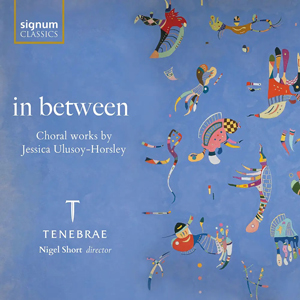
Once again, I was seduced, this time by “in between: Choral works by Jessica Ulusoy-Horsley” (24-bit/96kHz-Qobuz) as performed by the Tenebrae Choir with Nigel Short as director. Somehow, you don’t miss the orchestra in this purely a cappella piece, magnificent.
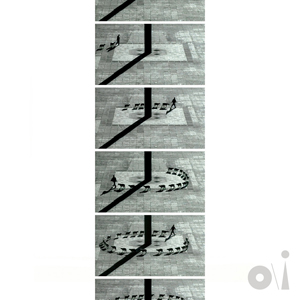
Peter Gabriel’s latest releases have yet to be compiled into his next album, “o/i”, so I was forced to search them out song by song. “A Hard Lesson (Dark-Side Mix)” (24-bit/96kHz-Qobuz) is epic Peter Gabriel at his best. Weirdly, the “Bright-Side Mix” mixed by Mark ‘Spike’ Stent has a distinct call back to “Selling England by the Pound” (Genesis) during the spoken work part. For “Won’t Stand Down” (24-bit/96kHz-Qobuz), the “Bright-Side Mix” appears to more capture the general atmosphere of Peter Gabriel positivity.

That’s about it for this time, until next time, remember it’s all about the music.
HiFiAudio.Guru Qobuz Playlist: https://open.qobuz.com/playlist/10673532
The reference system used in this review consisted of dCS Bartók APEX DAC with Headphone Amplifier, Black Dragon USB Cable, Black Dragon Power Cables, and Core Power Technologies A/V Equi=Core 1000, and Dan Clark Audio STEALTH Planar Magnetic Headphone.
Share This Entry


Leave a Reply
Want to join discussion?
Feel free to contribute!